
How to recover obsolete parts using reverse engineering
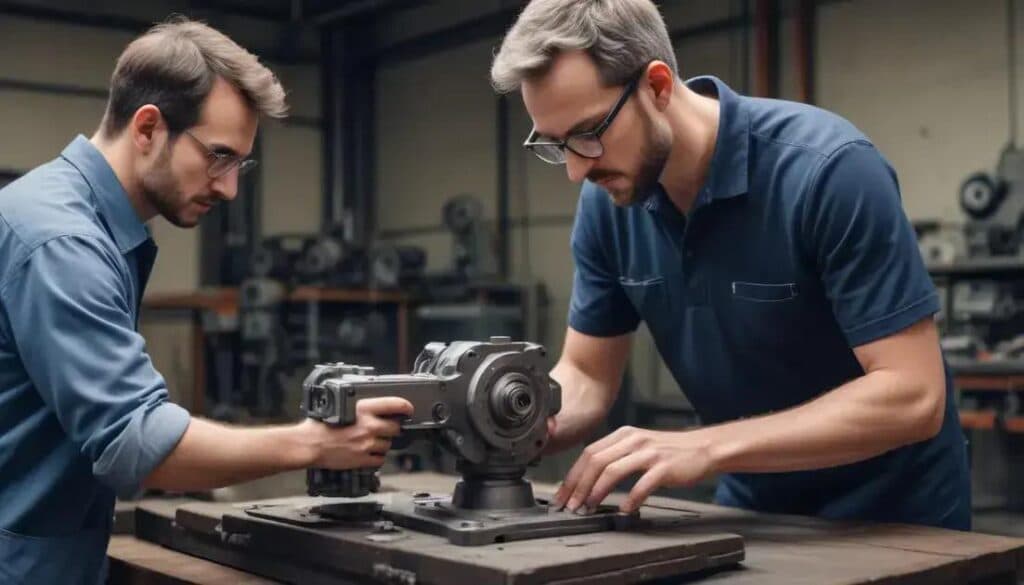
Have you considered how part recovery can take on a new look with reverse engineering? Often, when a component becomes obsolete, the solution is not to throw it away, but to reuse it with technology and intelligence. How about finding out how?
understanding reverse engineering in part recovery
Reverse engineering is a fundamental technique for the recovery of obsolete parts, since it allows a detailed understanding of the structure and operation of the original components. This approach consists of analyzing, measuring, and rebuilding the part without relying on previous drawings or technical documents, which are often unavailable. However, it is important to point out that this process requires precision and specialized equipment, such as 3D scanners and modeling software.
Because of the complexity of industrial parts, reverse engineering should be carried out in organized stages, starting with the collection of physical data from the original part, followed by the creation of a detailed digital model. In short, this model is used to manufacture a new part with dimensions and physical properties equivalent to the original, ensuring compatibility and the expected function.
Importance of equipment and software
Technological advances are decisive, since laser scanners or tomography methods make it possible to capture complex surfaces with high precision. However, the biggest challenge is interpreting this data and converting it into CAD drawings that can be used on manufacturing machines. In short, the combination of hardware and software defines the quality of the recovery.
Therefore, understanding reverse engineering is essential to successful recovery, since it avoids wasting resources and extends the service life of equipment. Indeed, this knowledge can be decisive when original parts are no longer available on the market, providing sustainability and savings for the company.
techniques and tools for recovering obsolete parts
To recover obsolete parts effectively, it is essential to know the main techniques and tools available, since they ensure the accuracy and functionality of the renewed component. However, not every technique suits every case, so the choice depends on the complexity and condition of the original part.
3D Scanning and CAD Modeling
3D scanning is one of the most common techniques, since it captures every detail of the part with high precision. The data obtained is then used to create digital models in CAD software, which allow adjustments and checks before manufacturing. Because of this, this tool reduces errors and speeds up the process.
Additive Manufacturing and CNC Machining
After modeling, parts can be produced by additive manufacturing (3D printing) or CNC machining. Additive manufacturing is suited to complex parts or low volumes. However, for greater strength and tolerance, CNC machining is the right choice, since it works with solid materials according to the digital design.
Other Complementary Tools
Besides machines, tools such as simulation software and mechanical analysis help validate the performance of the recovered part. In short, the combination of these techniques and tools produces reliable and lasting results for recovery.
Therefore, mastering these techniques enables faster, more economical, and more sustainable part recovery, since it avoids the need for large-scale production and premature disposal, benefiting both the environment and industrial costs.
advantages and challenges of using reverse engineering in maintenance
Using reverse engineering in maintenance offers several advantages, since it makes it possible to recover parts that would otherwise be discarded for being obsolete. However, this process also presents technical and financial challenges that need to be considered carefully.
Advantages of reverse engineering
One of the main advantages is cost reduction, since recovering parts avoids buying new components, which are usually expensive or unavailable. In addition, reverse engineering makes it possible to speed up maintenance time, since the process is carried out in-house, depending less on external suppliers. Moreover, this technique contributes to industrial sustainability, since it reduces part disposal and raw material consumption.
Challenges and limitations
Because of the complexity of modern equipment, reverse engineering requires advanced equipment and skilled labor, which can represent a high initial investment. In short, correctly interpreting the data obtained, such as through 3D scanning and modeling, requires in-depth technical knowledge. In addition, achieving the accuracy needed to ensure the recovered part works correctly is not always simple, especially for components with high mechanical demands.
Therefore, while reverse engineering is a powerful tool for maintenance, it is crucial to evaluate these challenges to ensure the process is efficient and brings real benefits to industrial operations.