
What Is Part Machining?
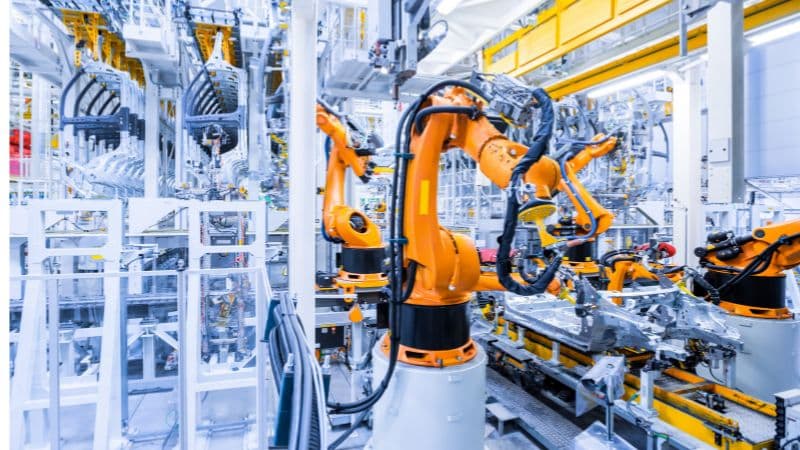
Part machining is manufacturing by material removal: lathes, milling machines, drills, and grinders cut the raw workpiece to the dimensions and tolerances of the design. Below, the main processes and where each one is used.
What Is Part Machining?
Part machining is a set of manufacturing processes that involves removing material from a raw workpiece to create a desired shape, reaching the specified dimensions and tolerances. This process is carried out with machine tools, such as lathes, milling machines, grinders, and drills, which use cutting tools to shape the workpiece.
How Does the Part Machining Process Work?
The part machining process can be simplified into a few main steps:
- Workpiece Preparation: It starts with selecting the raw material, which can be metal, plastic, or another material. The raw workpiece is then prepared and clamped in the machine tool.
- Machine Programming: The operator or programmer sets the machining parameters, such as cutting speed, feed rate, and depth of cut. These parameters vary depending on the material and the type of machining.
- Machine Operation: The machine tool is operated, and the cutting tool (drill, milling cutter, lathe tool, etc.) is engaged to remove excess material from the part, shaping it to the specifications.
- Measurement and Quality Control: During machining, part quality is regularly monitored with measuring instruments, such as calipers and micrometers, to ensure that tolerances are met.
- Finishing and Final Inspection: After machining, the part may go through finishing steps, such as polishing or heat treatment, depending on the specifications. A final inspection is carried out to ensure that the part meets quality requirements.
Types of Part Machining
There are several part machining methods, each suited to different types of materials and geometries. Some of the most common methods include:
- Turning: Used to rotate the part around its axis to create cylindrical or conical shapes.
- Milling: Involves using a rotating milling cutter to remove material from the part's surface, creating grooves, slots, and flat surfaces.
- Grinding: Used to produce high-precision surfaces through the use of abrasive grinding wheels.
- Drilling: Used to create holes or cavities in the workpiece.
- Wire EDM: A machining method in which an electrically charged wire is used to cut conductive material.
Importance of Part Machining
Part machining plays a vital role in modern manufacturing for several reasons:
- Precision: It enables the production of components with extremely tight tolerances, ensuring that parts fit together perfectly in complex systems.
- Repeatability: Large quantities of identical parts can be produced with high precision, maintaining consistency throughout production.
- Material Flexibility: It can be applied to a wide variety of materials, from metals to engineering plastics.
- Customization: It allows custom parts to be manufactured to meet specific project requirements.
- Cost Efficiency: Although it is a material-removal process, machining is highly efficient when it comes to producing complex parts.
- Diverse Applications: Part machining is essential in industries such as automotive, aerospace, medical, and electronics, among others.
Machining Small Parts
Machining small parts is an essential process in manufacturing miniature components that play a key role in a variety of industries. These parts can be complex and require tight tolerances, which makes machining an ideal choice.
Machining and tooling shops specializing in small parts have high-precision equipment capable of producing components of exceptional quality, serving the demands of sectors such as electronics, microtechnology, and healthcare.
Machining Automotive Parts
Machining automotive parts plays a vital role in manufacturing safe, reliable vehicles. From engines to transmissions, precision is essential. Machining and tooling shops specializing in automotive components are able to produce complex parts with tight tolerances. In addition, reverse engineering is often used to improve the efficiency and durability of components, ensuring that vehicles run smoothly.
Machining Agricultural Parts
Machining agricultural parts is fundamental to the agricultural industry, which requires robust, durable components for equipment such as tractors, harvesters, and farm implements. These parts often need to withstand harsh conditions and high loads. Machining companies specializing in this sector have the expertise needed to produce high-quality agricultural parts that contribute to efficiency and productivity in the field.
Machining Large Parts: Building Massive Structures
Machining large parts is a complex challenge that involves producing large-scale components, such as molds for the foundry industry, parts for construction, and components for wind turbines. These parts require robust, precise machining equipment to handle massive dimensions and tight tolerances. Companies specializing in machining large parts are essential for manufacturing the massive structures that drive various industries.
Custom Part Machining
Custom part machining is the answer for companies that need specific components for their operations. It allows companies to obtain precise, custom parts that meet their unique needs.
In addition, part localization is an important consideration for companies looking to manufacture locally and reduce import costs. Machining and tooling shops that offer made-to-order services and handle part localization play a crucial role in producing custom, high-quality components.