
Machining and Toolmaking Company
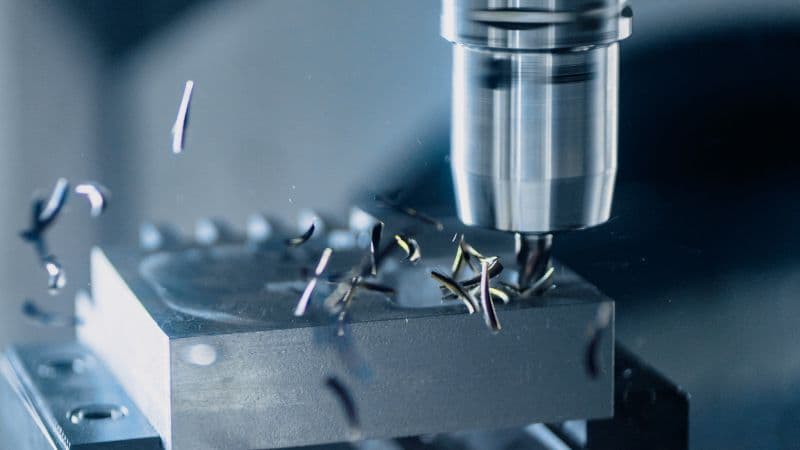
Machining and Toolmaking is a field of activity that includes the production of machines, metal parts, industrial equipment, and metallurgy and machining products.
Machining is an industrial process of cutting, bending, deforming, drilling, machining, finishing, assembly, and other mechanical processes to produce machine parts and components.
The machining process is carried out on special machines and special tools, such as lathes, milling machines, drills, cutting machines, presses, and other machines.
Toolmaking is a field that uses machining to create tools, molds, and other devices used to manufacture products. Toolmaking is also used to create special devices for laboratory testing, assembly, and machine maintenance.
There are several types of tools used in machining and toolmaking, such as cutting tools, including wires, blades, drills, and tools for turning, milling, threading, drilling, machining, finishing, and assembly.
These tools are made from materials such as steel, cast iron, copper, bronze, aluminum, brass, stainless steel, titanium, plastic, rubber, and other base materials.
Machining and Toolmaking is very important for modern industry, since it enables the manufacture of high-quality, durable products.
In addition, machining and toolmaking also enables the manufacture of products with greater efficiency and reduced cost.
For these reasons, machining and toolmaking are fundamental to economic development and to the success of many companies.
Machining of Large and Small Parts
Part machining is a process used to cut and shape materials (usually metals) to create machine components and parts.
Although machining methods can vary, the principle is the same: use manual or mechanical tools to remove material from a workpiece to obtain the desired shape.
For machining large parts, different equipment is needed for the process. This can include CNC (Computer Numerical Control) lathes, laser cutting machines, milling machines, chucks, etc.
This equipment allows the manufacturer to specify the exact dimensions and the desired quality specifications.
Once the equipment is selected, operators use the tools to achieve the exact dimensions desired.
The process of machining large parts is complex and requires skill and experience to ensure that the finished parts have the desired dimensions and quality.
On the other hand, in the machining of small parts, the process is different. These parts are usually machined with hand tools, such as drills, milling machines, lathes, and chucks.
These tools allow operators to achieve the exact dimensions and the desired quality specifications.
Machining small parts also requires skill and experience.
Operators need to know how to use the tools to remove material safely and accurately, as well as understand how to use the equipment to achieve the desired dimensions.
The development of toolmaking and machining
The industry has witnessed remarkable advances in the field of toolmaking and machining, two disciplines that play a crucial role in the production of high-precision parts and components.
From the early days of the industrial revolution to today, the development of these areas has been driven by technological innovations, improved processes, and the continuous demand for more efficient and sophisticated products.
Toolmaking has evolved from a manual approach to a highly automated, computer-driven process. In the past, creating tools required craft skills and took considerable time.
With the advent of computer-controlled machining (CNC), cutting, drilling, and shaping operations became extremely precise and efficient. This shift revolutionized industrial production, enabling the manufacture of complex parts at scale.
Toolmaking and machining services
The provision of toolmaking and machining services plays a vital role in modern industry. Companies that offer these services have the expertise and facilities needed to manufacture custom parts according to customer specifications.
This is especially relevant in sectors such as aerospace, automotive, and medical, where precision is fundamental.
A notable aspect is the growing adoption of reverse engineering in this scenario. Reverse engineering involves carefully disassembling and analyzing a product to understand its structure, function, and internal operation.
This process is particularly useful when the original design information is missing or outdated. Through the reverse engineering service, specialists can digitally reconstruct parts and components, which is essential for maintenance, repair, and manufacturing of replacements.