
Mechanical Forming
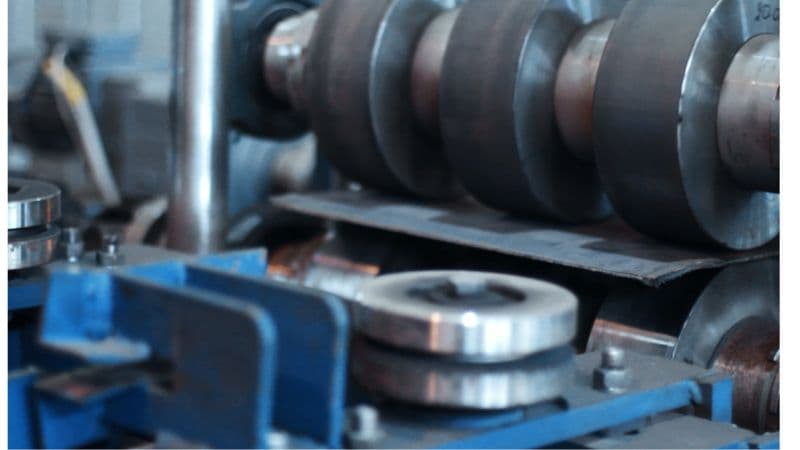
Mechanical forming is the group of processes that change the shape of a metal through plastic deformation, without removing material: forging, rolling, stamping, extrusion, and drawing. Below, we cover how each process works and where it is used.
What Is Mechanical Forming?
Mechanical forming is the process of changing the shape of a material through mechanical forces, such as compression, tension, bending, and torsion. It is widely used in the manufacture of metal, plastic, and ceramic parts.
The main idea behind mechanical forming is to apply controlled pressure to a material, forcing it to take the desired shape.
Main Mechanical Forming Processes
There are a variety of mechanical forming processes, each with its own specific characteristics and applications. Some of the most common processes include:
- Forging: In forging, the material is heated and shaped by compression between dies. This results in better strength and durability of the parts.
- Stamping: Stamping is widely used in the manufacture of metal parts. The material is cut, bent, or formed according to the die mold.
- Rolling: In rolling, the material is passed between rolls to reduce its thickness and improve its mechanical properties. It is commonly used in the production of sheet metal.
- Extrusion: Extrusion involves forcing a material through a die to create products with specific cross-sections, such as aluminum tubes and profiles.
- Drawing: In drawing, a material is pulled through a die with a smaller diameter to produce wires or cables.
- Cold forming: In this process, forming takes place at room temperature, which is beneficial for avoiding deformation of the material. It is commonly used in the manufacture of high-precision metal products.
Applications of Mechanical Forming
Mechanical forming plays a crucial role in many industries and applications. Some notable examples include:
- Automotive: Mechanical forming is widely used in the manufacture of automotive parts, such as bodies, engines, and structural components.
- Aerospace: In the aerospace industry, mechanical forming is essential for producing lightweight, strong components, such as aircraft wings and fuselages.
- Construction: In civil construction, mechanical forming is used to create steel profiles and other structural materials.
- Electronics Industry: Mechanical forming is applied in the manufacture of electronic components, such as device enclosures and heat sinks.
- Food Industry: In the production of kitchen utensils, pots and pans, and cutlery, mechanical forming is common in shaping stainless steel and aluminum parts.
The Future of Mechanical Forming
Mechanical forming continues to evolve and play a vital role in industry. Several developments and trends are shaping the future of this technique:
- Simulation Technology: The use of advanced simulation software is allowing manufacturers to predict and optimize the forming process, saving time and resources.
- Laser-Assisted Forming: Combining mechanical forming and lasers is making it possible to create products with complex geometries and high precision.
- Advanced Materials: The development of stronger, lighter materials is expanding the possibilities of mechanical forming in many industries.
- Sustainability: The pursuit of more sustainable practices is leading to advances in mechanical forming with less material waste and lower energy consumption.
- Industry 4.0 Integration: Mechanical forming is benefiting from the integration of Industry 4.0 technologies, such as the Internet of Things (IoT) and data analytics, to improve process efficiency and quality.
How does the Mechanical Forming process work?
The mechanical forming process is a technique that involves the controlled application of mechanical forces to shape materials to the desired geometry. This can be achieved through several methods, such as forging, stamping, rolling, extrusion, drawing, and cold forming.
Each method has specific characteristics that determine its application. The choice of process depends on the material to be shaped, the precision tolerances, and the complexity of the part.
Steps of the Mechanical Forming process
The mechanical forming process can be divided into several essential steps:
- Material Preparation: In this phase, the starting material is selected and prepared. This can include heating the material in the case of forging or preparing metal coils for stamping.
- Application of Mechanical Force: The next step involves applying mechanical forces, which can be carried out by presses, hammers, rolls, or other specialized equipment, depending on the forming method chosen.
- Cooling or Heat Treatment: After forming, it is often necessary to cool or heat treat the material to improve its mechanical properties.
- Finishing and Inspection: Formed parts may go through finishing processes, such as cutting, machining, or polishing, and are inspected to make sure they meet quality specifications.
How does simulation software make a difference in the Mechanical Forming process?
The incorporation of simulation software, especially software involving 3D scanning and reverse engineering, has revolutionized the mechanical forming process.
Simulation software allows engineers to predict material behavior during forming, identifying areas of stress, deformation, and potential defects.
The 3D scanning and reverse engineering help digitize real parts to create virtual models, making it possible to optimize the process before actual production.