
Heat Treatment
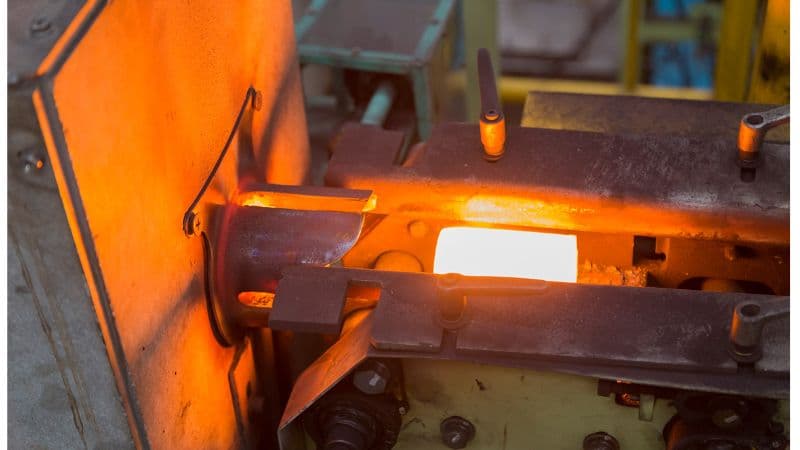
Heat treatment is the controlled heating and cooling of a metal to change its hardness, strength, and ductility without changing the shape of the part. The main ones are quenching, tempering, annealing, and normalizing, explained below.
What Is Heat Treatment?
Heat treatment is a controlled process of heating and cooling materials, with the aim of changing their physical and mechanical properties.
This is achieved through a series of carefully planned steps that involve applying heat at different temperatures and for different periods of time. The result of this process is an improvement in the material's characteristics, making it better suited to specific applications.
There are several common objectives in heat treatment, including:
- Increased Hardness: Heat treatment can increase the hardness of a material, making it resistant to wear and abrasion.
- Increased Mechanical Strength: It can improve a material's tensile, compressive, and flexural strength, making it better suited to high-load applications.
- Improved Ductility: Heat treatment can also increase a material's ductility, making it better suited to applications that involve plastic deformation.
- Elimination of Residual Stresses: It can eliminate residual stresses that develop during part manufacturing, improving dimensional stability.
- Improved Corrosion Resistance: In some cases, heat treatment can increase the corrosion resistance of materials.
Types of Heat Treatments
There are several types of commonly used heat treatments, each with its own specific techniques and objectives. Some of the most common heat treatments include:
- Quenching: This process involves heating the material to a critical temperature and then cooling it rapidly, usually in a medium such as oil or water. This results in increased hardness and strength, but also makes the material more brittle.
- Tempering: After quenching, the material can be tempered, which is a process of heating to a temperature lower than that of quenching. This reduces brittleness and improves toughness.
- Normalizing: Normalizing involves heating the material to a critical temperature and then air cooling it. This improves hardness and strength, but with a smaller increase in hardness compared to quenching.
- Annealing: Annealing is the process of heating the material to a specific temperature and then cooling it slowly to relieve internal stresses and improve machinability and ductility.
- Solution Treatment: This treatment is often used in metal alloys to dissolve unwanted elements. The material is heated to a temperature at which these elements become soluble and is then cooled to remove the impurities.
- Carburizing: Carburizing involves adding carbon to the surface of a material, making it harder. This process is common in surface treatments of gear and bearing parts.
Applications of Heat Treatment
Heat treatment is widely used in many industries and applications. Here are some of the areas in which heat treatment plays a key role:
- Automotive Industry: Engine components, such as crankshafts and gears, are often heat treated to improve their strength and durability.
- Aerospace Industry: Critical aircraft parts, such as wings and chassis structures, are heat treated to withstand extreme conditions.
- Metallurgical Industry: Heat treatments are essential in the production of steels and special alloys for a variety of applications.
- Energy Industry: Power generation equipment, such as turbines, is often heat treated to improve strength and efficiency.
- Construction Industry: Structural and high-strength parts in buildings and bridges are heat treated to ensure safety and longevity.
Steps of the Heat Treatment process
The heat treatment process consists of several crucial steps. First, the metal material is heated to the desired critical temperature. The material is then held at that temperature for a set time.
After the heating step, rapid cooling is carried out, using suitable media such as oil or water. The cooling rate is controlled to achieve the desired characteristics. In some cases, the treatment may be followed by a tempering step, in which the material is heated again to a lower temperature to reduce brittleness and improve toughness.
How does simulation software make a difference in the Heat Treatment process?
The use of simulation software plays a key role in improving the heat treatment process. Through technological advances such as 3D scanning and reverse engineering, it is possible to create accurate digital models of the materials and parts to be heat treated.
With these models, engineers can simulate the heat treatment process before carrying it out in practice. This makes it possible to adjust variables such as temperatures, heat exposure times, and cooling rates to optimize the desired result.
The 3D scanner and reverse engineering make it possible to accurately capture the geometry of parts, while the simulation software analyzes how the heat treatment will affect those parts. This approach saves time and resources, reducing the need to repeat the treatment or run physical tests on prototypes. It also ensures that parts are treated consistently, maintaining the quality and integrity of the final product.