
Product Design
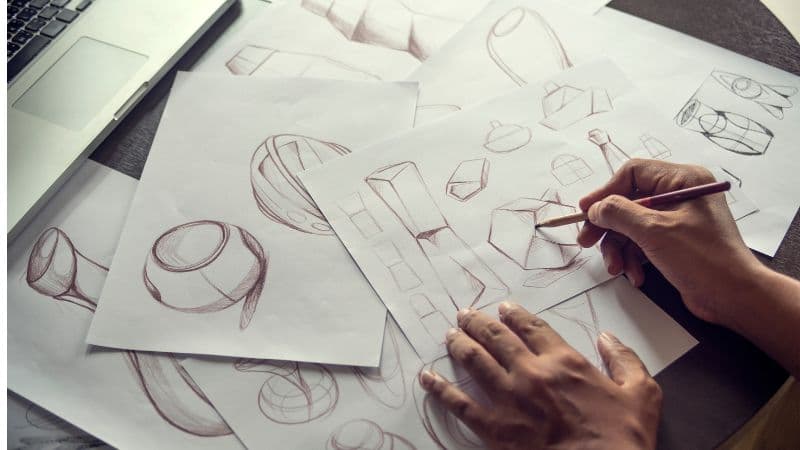
Product design is a multifaceted discipline that plays a key role in virtually every product we use in our daily lives. Indeed, from the conception of innovative electronic products to the development of ergonomic furniture and functional household items, product design proves to be the key to creating attractive, effective, and meaningful products.
In addition, we will explore what product design is, how it works, and its various development phases. In short, understanding these steps is essential to see how design contributes to creating products that not only meet users' needs, but also delight and inspire.
What Is Product Design?
Product design is a design discipline focused on creating and developing products that meet consumers' needs while also being attractive, functional, and feasible to produce. The product design process involves a series of steps, from identifying market opportunities to conception, prototyping, testing, and mass production.
Product designers work to improve the appearance and usability of products, as well as their efficiency, safety, and sustainability. They need to balance aesthetic, ergonomic, technical, and cost considerations to create products that stand out in the market and meet consumers' expectations.
How Does the Process Work?
The product design process is highly iterative and involves several interconnected steps. Although the specific approach may vary from project to project, the general steps of the product design process include:
- Identifying Opportunities: In this initial phase, designers identify market opportunities and consumer needs. They conduct market research, collect data, and analyze trends to define what the product should be and how it should meet users' needs.
- Conception: Based on the information collected, designers begin to conceive the product. They develop ideas, sketches, and initial concepts, exploring different approaches to the project.
- Prototype Development: We turn the initial concepts into prototypes. These prototypes range from simple models to functional representations of the product. We use these prototypes to test the design and get feedback.
- Testing and Refinement: We test the prototypes under real conditions or through simulations. We use the results to refine the design, adjust details, and make sure the product meets performance and usability criteria.
- Production and Manufacturing: After finalizing the design, designers work directly with engineers and manufacturers to prepare the product for mass production. They select the materials, define the manufacturing methods, and solve technical challenges.
- Launch and Marketing: The company launches the product on the market and implements marketing strategies to promote it. They create the brand identity, develop the packaging, advertise, and define distribution strategies.
- Post-Launch Evaluation: After launch, the product is monitored to collect customer feedback and identify areas for improvement. This information can be used for future updates.
Steps of the Design process
The process involves several interconnected steps, with the goal of creating innovative and effective products. The key steps include:
- Research and Opportunity Identification: Understanding the market is essential for any company that wants to succeed. In addition, it is critical to understand consumers' needs, as this allows strategies to be adapted to serve them better. In this way, by exploring design opportunities, a company can stand out and offer innovative solutions that meet the expectations of its target audience.
- Conception and Idea Generation: Exploring various approaches and concepts for the product.
- Prototyping and Modeling: Creating prototypes to visualize and test the design.
- Testing and Validation: Testing the product under real or simulated conditions to ensure its functionality and usability.
- Development and Engineering: Collaborating with engineers to turn the design into a viable product.
- Production and Manufacturing: Selecting materials and manufacturing methods for mass production.
- Launch and Marketing: Introducing the product to the market and promoting it to consumers.
- Post-Launch Evaluation: Monitoring the product after launch and making improvements based on customer feedback.
How does simulation software make a difference in the Product Design process?
Advances in technology, including the use of simulation software, have revolutionized the product design process. In particular, simulation software allows designers to virtually test the behavior and performance of products under various conditions before creating a physical prototype. In this way, detailed analysis can be carried out without having to physically build every model, saving time and resources. As a result, product development becomes more efficient and accurate, making it possible to identify problems and make adjustments before final manufacturing.
A notable example is the use of simulation software in reverse engineering. By combining 3D scanning and simulation software, designers can create accurate digital models of existing products, enabling analysis and optimization of the design without having to disassemble or modify the physical product.
Click here to learn more about Technosim Engineering