
Dental Scanning: What It Is, How It Works, and Advantages
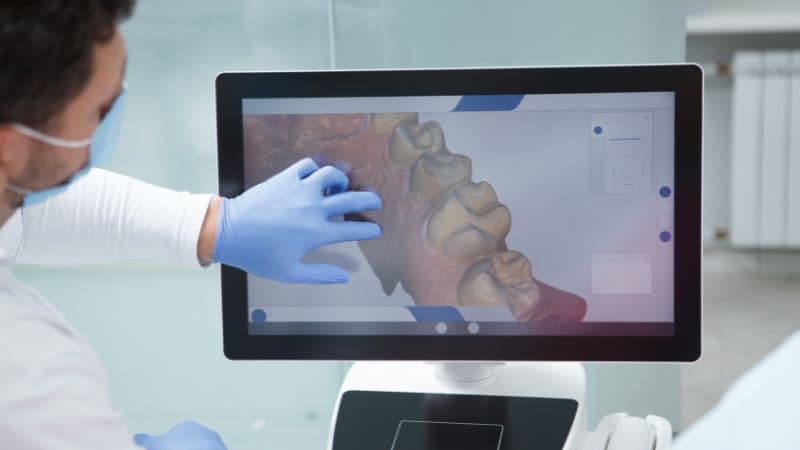
Dental scanning is the digital 3D capture of teeth, gums, and bite with an intraoral scanner, in place of impressions with silicone or alginate. The resulting file is used to plan treatment and produce crowns, aligners, and guides, including through 3D printing.
3D Printing, an innovation that has been gaining ground in many sectors, has found an especially welcoming home in dentistry.
In the past, when a patient needed a dental implant, for example, the process involved a series of time-consuming and uncomfortable steps. Today, thanks to 3D Printing, it is possible to create custom prostheses with unmatched precision.
Digital scans capture the nuances of the patient's mouth, and this information is translated into three-dimensional models that can be printed directly in biocompatible materials.
The result? Prostheses and implants that fit perfectly and provide unmatched comfort and functionality.
The beauty of adopting dental scanning, beyond the obvious aesthetic improvements, also lies in the medical and psychological benefits it brings.
Eliminating invasive and uncomfortable procedures reduces the stress associated with dentist visits, making the experience more pleasant for patients of all ages.
In addition, the accuracy of digital models results in more effective and longer-lasting treatments, significantly improving oral health.
What is a dental scan?
The world of dentistry is undergoing an exciting technological revolution, and dental scanning is one of the leading innovations of this transformation. Instead of traditional uncomfortable plaster molds, dental scanning uses advanced technologies to create accurate 3D digital models of a patient's mouth and teeth.
How does the Laser Scanner work?
At the heart of dental scanning is the Laser Scanner. This device uses laser beams to map the surface of the teeth and oral structures in detail.
As the Laser Scanner moves through the mouth, it captures thousands of data points per second, generating a highly accurate digital representation of the patient's oral cavity.
The accuracy of the Laser Scanner is remarkable, allowing the capture of minute details, such as the shape of the teeth, the relationship between them, and the surrounding anatomy.
The speed and efficiency of the process make the experience more comfortable for the patient, replacing bothersome plaster molds.
What is teeth scanning used for?
The dental scan has an impressive range of applications. It is widely used for planning dental treatments, such as placing crowns, bridges, implants, and orthodontic appliances.
In addition, it is a valuable tool for early detection of dental problems, allowing professionals to identify cavities, excessive wear, and other conditions more accurately.
3D digitization of the patient's mouth is also essential for creating custom devices. From the digital models, prostheses and appliances are manufactured with precision, resulting in a perfect fit and comfort for the patient.
What are the advantages of intraoral scanning?
The intraoral scan, which takes place inside the patient's mouth, offers several advantages over conventional methods.
First, it eliminates the discomfort associated with plaster molds, making the experience more pleasant.
In addition, accuracy is improved, since the digital scan captures minute details that could be lost in traditional molds.
Collaboration among professionals is also made easier, since digital models can be shared instantly.
This is particularly useful in cases that require the opinion of different specialists, speeding up the decision-making process.
How much does a dental scan cost?
The cost of a dental scan can vary depending on several factors, such as geographic location, the complexity of the procedure, and the chosen clinic.
It is important to consider that, despite an initial investment, the long-term benefits can be significant.
The accuracy of the digital scan often results in more effective and longer-lasting treatments, which can contribute to saving time and money in the future.
In addition, the more comfortable experience for the patient and the customized results are valuable aspects worth considering when evaluating the cost of the procedure.
Dental scanning is an exciting step toward the future of dentistry.
Its ability to create accurate, personalized digital models is transforming the way professionals care for our smiles, offering a more comfortable, effective, and technologically advanced experience.