
Additive Manufacturing: What It Is, Examples, What It Is For, and Quotes!
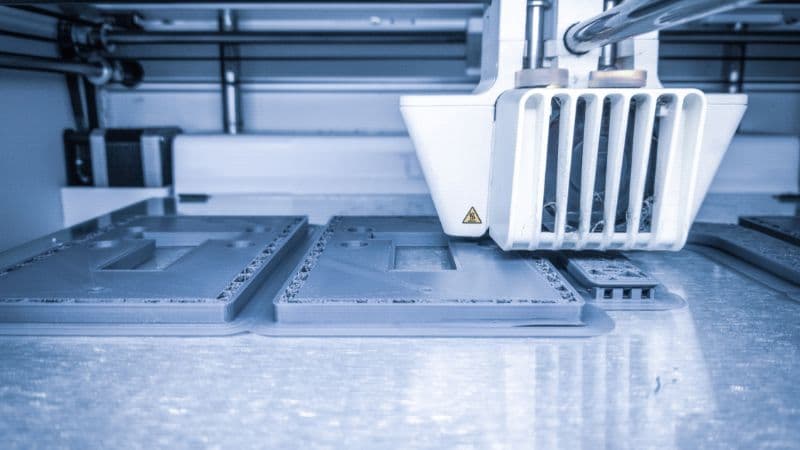
Additive manufacturing, or 3D printing, is the manufacturing of parts by adding material layer by layer from a digital model. It produces geometries that machining cannot reach and requires no tooling. Below are the technologies, materials, and applications.
What Is Additive Manufacturing?
Additive manufacturing is a manufacturing process that differs drastically from traditional methods such as machining or injection molding. While traditional techniques involve removing material from a raw workpiece to create a desired shape, additive manufacturing builds objects layer by layer from materials, usually plastics, metals, or ceramics.
The process usually starts with a 3D digital model of the desired object, which is then divided into horizontal slices. The 3D printer reads these slices and adds material, one layer at a time, until the object is fully built. This “additive” method offers a number of advantages over traditional manufacturing, such as less material waste, greater design freedom, and the ability to create complex geometries that would be difficult or impossible to produce any other way.
How Does Additive Manufacturing Work?
Additive manufacturing involves several key steps:
- 3D Modeling: The first step is to create a 3D digital model of the object you want to manufacture. This can be done using 3D modeling software or by 3D scanning an existing object.
- Model Preparation: The digital model is then prepared for printing, which includes slicing into layers, creating supports if necessary, and setting print parameters such as temperature and print speed.
- 3D Printing: The prepared model is loaded into a 3D printer, which deposits layers of the chosen material, one at a time, to build the object. The choice of material can range from common plastics to precious metals and advanced composites.
- Post-Processing: After printing, some parts may require post-processing, such as support removal, polishing, or heat treatment, to achieve the desired quality.
- Inspection and Testing: In many cases, it is important to carry out inspections and tests to ensure that the manufactured object meets the desired quality and performance standards.
Applications of Additive Manufacturing
Additive manufacturing has a wide range of applications across many industries. Some of the most affected areas include:
- Aerospace Industry: 3D printing is used to create lightweight, strong parts, such as engine components and aircraft structures.
- Healthcare Sector: In medicine, additive manufacturing is used to create custom prostheses, medical devices, and even 3D-printed organs.
- Automotive Industry: Automakers use 3D printing for rapid prototyping, production of custom parts, and even for creating entire cars.
- Jewelry Sector: In jewelry making, additive manufacturing enables the creation of intricate, unique pieces with exceptional precision.
- Defense Industry: 3D printing is used to manufacture weapon components, drones, and military equipment.
- Architecture and Construction: Additive manufacturing is also being explored to build houses and buildings quickly and efficiently.
The Future of Additive Manufacturing
Additive manufacturing is evolving rapidly, and the future promises exciting advances. Some trends and developments to watch include:
- Advanced Materials: Ongoing research is leading to the development of stronger, more versatile materials for 3D printing, including high-strength metal alloys and biocompatible materials.
- Large-Scale Printing: The ability to print ever larger objects is expanding, opening the door to applications in construction and in manufacturing large parts.
- Mass Customization: The ability to create custom products at scale is one of the greatest advantages of additive manufacturing and will continue to be explored across many sectors.
- Sustainability: Additive manufacturing can reduce material waste compared with traditional methods, contributing to more sustainable manufacturing practices.
- Integration with AI and IoT: Integrating additive manufacturing with artificial intelligence (AI) and the Internet of Things (IoT) will allow more precise and efficient control of the printing process.
What Is Additive Manufacturing Used For?
Additive manufacturing has a wide range of applications across many industries. It is used to create parts and products in sectors ranging from reverse engineering to parts and equipment maintenance, including machining and tooling shops and part localization. The main value of additive manufacturing lies in the ability to manufacture objects efficiently and in a customized way, with notable benefits in design flexibility, cost reduction, and shorter production times.
Additive Manufacturing in Industry 4.0
Additive manufacturing plays a crucial role in Industry 4.0, which is characterized by the integration of advanced automation, data analytics, and digitalization technologies. 3D printing fits perfectly into this scenario, enabling on-demand production, mass customization, and decentralized manufacturing. It plays a key role in the digital transformation of companies, making production more agile, efficient, and connected.
Examples of Additive Manufacturing
Additive manufacturing is used in a variety of sectors. Some notable examples include:
- Rapid Prototyping: 3D printing is often used to quickly create product prototypes, allowing companies to test their ideas before investing in large-scale production.
- Custom Medical Prostheses: In healthcare, additive manufacturing is used to create custom medical prostheses, such as dental prostheses and orthopedic implants.
- Aviation Spare Parts: Airlines use 3D printing to manufacture spare parts quickly and effectively, reducing aircraft downtime.
- Custom Jewelry: In jewelry making, additive manufacturing enables the creation of unique pieces with intricate details.
- Home Construction: 3D printing is being explored for building homes efficiently and sustainably.
Price Quotes for 3D Scanner and 3D Printer Services
If you are interested in additive manufacturing services, such as reverse engineering, parts and equipment maintenance, machining and tooling shops, or part localization, it is important to get price quotes for 3D scanner and 3D printer services.
These services can vary in cost depending on the complexity of the project, the material used, and the number of parts to be produced. We recommend contacting companies that specialize in these services to request customized quotes that meet your specific needs. Be sure to include precise project details when requesting quotes to ensure you get accurate information on costs and lead times.