
Parts made on a 3D printer
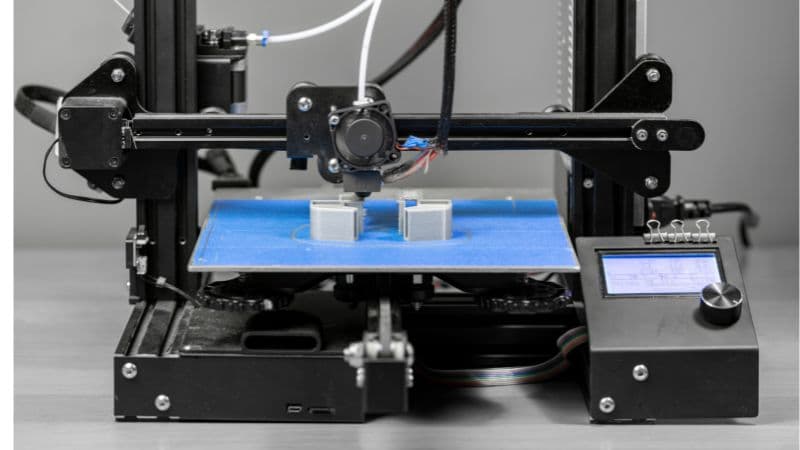
Parts made on a 3D printer are already used in industry as prototypes, jigs, fixtures, spare parts, and even final components. Below, we cover how part printing works, the most commonly used materials, and when it pays off.
How Does 3D Printing of Parts Work?
3D printing, also known as additive manufacturing, works similarly to a conventional printer, but instead of printing ink on paper, it creates three-dimensional objects layer by layer. Here is a summary of how the 3D part printing process works:
- Digital Modeling: It all starts with a 3D digital model of the part you want to create. This model is built using 3D modeling software, which lets you design the part in detail.
- Print Preparation: The digital model is processed and sliced into layers, creating a set of instructions that the printer will follow. This involves setting parameters such as layer thickness and infill density.
- Material Selection: Choosing the material is crucial and depends on the type of part being printed. Plastics, metals, ceramics, resins, and even biological materials can be used.
- 3D Printing: The 3D printer starts building the part layer by layer, adding material according to the instructions from the digital model. There are several printing methods, such as stereolithography (SLA), selective laser sintering (SLS), fused deposition modeling (FDM), and others.
- Post-Processing: After printing, the part may go through additional processes, such as cleaning, polishing, assembly of components, and heat treatment.
Applications of Parts Made on a 3D Printer
3D printing of parts has a wide range of applications across many industries:
- Aerospace Industry: Complex, lightweight parts can be 3D printed for use in aircraft and spacecraft, reducing weight and increasing efficiency.
- Automotive Industry: Automakers use 3D printers to create prototypes of automotive parts and components, as well as to customize vehicles.
- Medical Sector: Prostheses, custom implants, and anatomical models are produced with 3D printing, meeting patients' individual needs.
- Energy Industry: Additive manufacturing is used to produce complex parts in power plants, such as turbines and generators.
- Defense Sector: Critical parts for military applications, such as weapons and equipment, are 3D printed to meet specific requirements.
- Product Design: In the design industry, product prototypes are 3D printed to evaluate design, ergonomics, and functionality.
- Food Sector: 3D food printing is emerging, enabling the creation of custom food decorations and structures.
Benefits of 3D Printing Parts
3D printing of parts offers numerous benefits:
- Customization: Parts can be customized to meet specific requirements.
- Speed: Part production can be faster compared to traditional manufacturing methods.
- Material Savings: 3D printing generates less material waste compared to subtractive techniques.
What Can Be Made with a 3D Printer?
3D printing technology has made it possible to create a wide range of objects and components. Virtually anything that can be designed as a digital 3D model can be made with a 3D printer. Here are some of the categories of items that can be made with 3D printers:
- Prototypes: 3D printers are widely used to create product prototypes, allowing designers and engineers to test ideas and designs before starting mass production.
- Spare Parts: Spare parts for equipment and machines can be printed on demand, saving time and storage costs.
- Art and Decor: Sculptures, art objects, and decorative items can be 3D printed, allowing for complex, customized designs.
- Toys and Games: Custom toys, puzzles, and games can be made with 3D printers.
- Prostheses and Implants: Custom prostheses, medical implants, and orthopedic devices are created with 3D printing to meet patients' individual needs.
- Food: 3D food printing is used to create food decorations, custom sweets, and more.
- Automotive Components: Car parts, such as brackets, grilles, and dashboard trim, can be 3D printed.
How Are 3D Automotive Parts Made?
Manufacturing automotive parts with 3D printing involves the following steps:
- 3D Design: It starts with creating a 3D model of the part to be made. This is usually done by automotive designers or engineers using 3D modeling software.
- Material Selection: The material to be used is selected based on the properties required for the part, such as strength, durability, and weight.
- Print Preparation: The 3D model is prepared for printing, with settings specific to the 3D printer, such as resolution and infill density.
- 3D Printing: The 3D printer builds the part layer by layer, depositing material according to the specifications of the digital model.
- Post-Processing: After printing, the part may go through post-processing steps, such as cleaning, polishing, and assembly of additional components.
What Types of Parts Are Made on a 3D Printer?
There are several types of parts that can be made with 3D printers, including:
- Plastic Parts: 3D-printed plastic parts are common and can be used in a wide range of applications.
- Metal Parts: Metal 3D printers are used to create parts in metal alloys, which are durable and strong.
- Custom Parts: Customization is a key feature of 3D printing, enabling the creation of made-to-measure parts to meet specific requirements.
- Precision Parts: 3D printers are used to manufacture high-precision parts, such as gears and precision components.
- Medical Parts: Custom prostheses, implants, and medical devices are created with 3D printing.
- Automotive Parts: Automotive components, such as brackets, guards, and dashboard trim, can be 3D printed.
Price of Parts Made on a 3D Printer
The price of parts made on 3D printers can vary significantly based on several factors, including the material, the complexity of the design, the size of the part, and the 3D printing technology used.
Simpler, smaller parts are generally more affordable, while larger or complex parts can be more expensive. In addition, the number of parts to be produced also affects the total cost. To get an accurate price, it is advisable to request quotes from 3D printing service providers.
Step-by-Step Guide to Hiring a 3D Printing Company
Hiring a 3D printing company involves several steps:
- Identifying Needs: Clearly define your 3D printing needs, including the type of parts you want to produce.
- Company Research: Look for 3D printing companies that meet your needs, taking into account factors such as experience, reputation, and technical capability.
- Quote Request: Contact potential companies to get detailed quotes based on your specifications.
- Proposal Evaluation: Evaluate the companies' proposals, taking into account costs, lead times, and other contract terms.
- Reference Check: Ask for references from previous clients to verify the quality of the company's work.
- Company Selection: Based on your evaluation, choose the 3D printing company that best meets your needs.
- Contract and Agreement: Be sure to draw up a clear contract that specifies deadlines, costs, and other project terms.
- Follow-Up: Closely monitor the progress of the project and be available to provide feedback during the printing process.
By following this step-by-step guide, you will be well prepared to hire a 3D printing company that can meet your specific needs, whether for projects related to reverse engineering, part and equipment maintenance services, machining and tooling companies, or part localization. Make sure the company you choose has the expertise and technology needed to ensure the success of your project.