
Rapid Prototyping: What It Is, Types, Machines, and How It Works
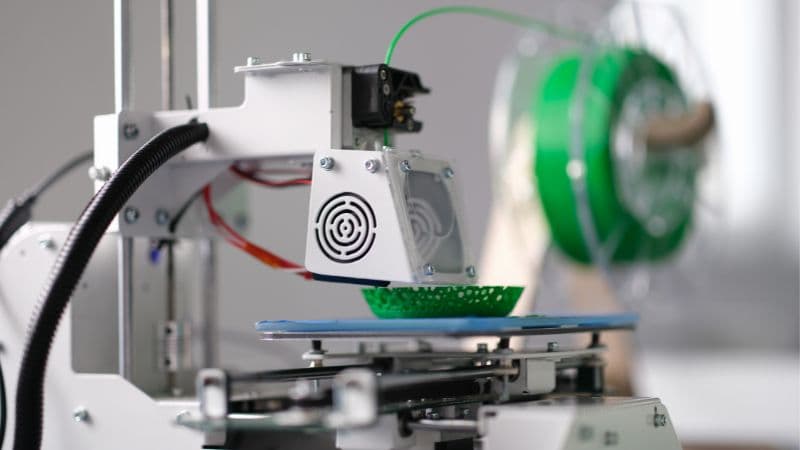
Rapid prototyping is the manufacture of physical prototypes directly from a CAD model, in hours or days, usually through 3D printing, CNC machining, or rapid tooling.
With the prototype in hand, the team tests fit, ergonomics, and function before investing in tooling, saving time and money. Below, we cover the types of technology and where each one applies.
What Is Rapid Prototyping?
Also known as 3D prototyping, rapid prototyping is a process that enables the fast creation of three-dimensional models or prototypes of a product or component.
These models are built from digital data using additive manufacturing technologies, which add layers of material one on top of another until the desired object is formed. Rapid prototyping offers an effective way to validate designs, test functionality, and communicate ideas.
How Does Rapid Prototyping Work?
The rapid prototyping process involves several steps:
3D Modeling:
The first step is to create a digital 3D model of the object to be prototyped. This can be done using 3D modeling software such as AutoCAD, SolidWorks, or Blender. The model is saved in a format compatible with the prototyping machine.
Material Selection:
It is important to choose the right material for the prototype. Common materials include plastic, resin, metal, and ceramic, depending on the needs of the project.
3D Printing:
The digital model is loaded into the rapid prototyping machine. The machine builds the prototype layer by layer, adding material according to the model's specifications.
Several 3D printing technologies are available, such as stereolithography (SLA), selective laser sintering (SLS), and fused deposition modeling (FDM), each with its own unique characteristics.
Finishing and Testing:
Once printing is complete, the prototype may require some finishing, such as support removal, sanding, or painting. It is then tested to verify its functionality and accuracy against the original design.
Iteration:
Based on the test results, adjustments can be made to the design and new iterations of the prototype created until the final product meets expectations.
Applications of Rapid Prototyping
Rapid prototyping has a wide variety of applications across different sectors:
Product Development:
Companies use rapid prototyping to create conceptual models of products, allowing them to visualize and test new ideas before investing in mass production.
Engineering and Design:
Engineers and designers use prototypes to validate their solutions and identify potential design problems.
Medicine:
In medicine, rapid prototyping is used to create custom prostheses, medical devices, and anatomical models for surgical planning.
Automotive Industry:
Automakers use prototypes to test new components and vehicle designs.
Aerospace Sector:
The aerospace industry uses rapid prototyping to create models of aerospace components, saving time and resources in the development process.
Architecture:
Architects use rapid prototyping to create models of complex buildings, allowing clients to visualize projects before construction.
Benefits of Rapid Prototyping
Rapid prototyping offers several benefits, such as:
Time Savings:
It speeds up the development process, reducing the time needed to go from concept to production.
Cost Reduction:
Early detection of design problems helps avoid high costs down the road.
Customization:
The ability to create custom prototypes meets the specific needs of projects.
Improved Communication:
Physical prototypes make communication between teams and stakeholders easier, making the project simpler to understand.
Trends in Rapid Prototyping
As technology evolves, rapid prototyping continues to develop. Some current trends include:
Advanced Materials:
The development of stronger, more durable materials makes it possible to create prototypes whose characteristics are ever closer to those of final products.
Multi-Material Printing:
Some 3D printers can combine multiple materials in a single prototype, expanding design options.
Large-Scale Printing:
Increased 3D printing capacity allows the creation of larger, more complex prototypes.
Automation:
Automation is becoming more common in rapid prototyping, improving efficiency and accuracy.
Types of rapid prototyping
There are several types of rapid prototyping, each with its own characteristics and advantages. Some of the most common types include:
- Selective Laser Sintering (SLS): This method uses a laser to fuse material powders, usually plastic or metal, layer by layer. It is widely used to create functional prototypes and end-use components.
- Stereolithography (SLA): In this process, a laser cures liquid resin, layer by layer, to create objects. It is known for its high accuracy and surface quality.
- Fused Deposition Modeling (FDM): In this method, a plastic filament is melted and deposited layer by layer to create the desired object. It is widely used in consumer 3D printers.
- Laminated Object Manufacturing (LOM): In this process, layers of paper are cut and glued together to create the prototype.
- Three-Dimensional Inkjet Printing (3DP): This technique uses a liquid binder and a powder to create layers, then applies dye to give the prototype color.
- Direct Metal Laser Sintering (DMLS): This variant is used to create metal parts by fusing metal powders with a high-power laser.
Is there a rapid prototyping machine?
Yes, rapid prototyping machines exist, also known as 3D printers, and are designed specifically for manufacturing three-dimensional prototypes. These machines vary in size, capacity, and technology, depending on the user's needs.
They are widely used in industry, research laboratories, universities, and even by technology enthusiasts. Rapid prototyping machines are an essential part of the prototyping process, as they turn digital models into physical objects.
Which company provides rapid prototyping services?
Several companies offer rapid prototyping services, serving a wide range of sectors and needs.
Many of these companies specialize in reverse engineering, part and equipment maintenance services, machining and tooling companies, and part localization services. Some notable companies in this field include Proto Labs, Stratasys Direct Manufacturing, Sculpteo, and Shapeways.
These companies offer custom services, including the production of prototypes, production parts, concept models, and more.
When choosing a rapid prototyping company, it is important to consider quality, the printing technology used, delivery speed, and the ability to meet the specific needs of the project.
Rapid prototyping plays a crucial role in many industries, providing an effective way to turn ideas into reality quickly and economically.