
3D Food Printer: What It Is For and How It Works
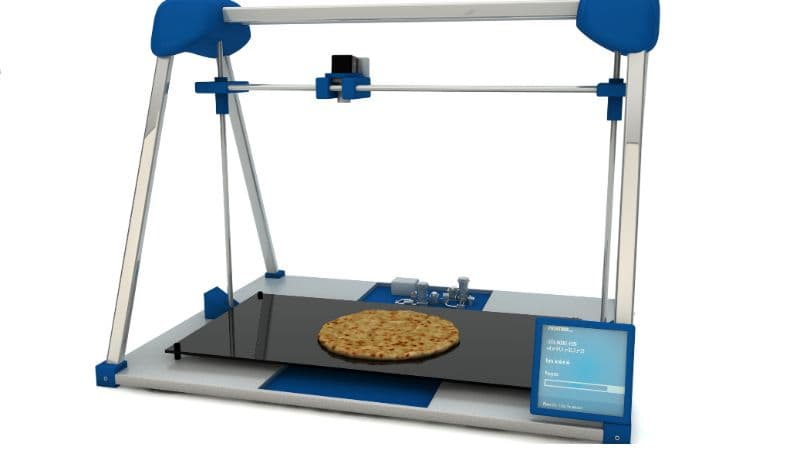
The 3D printer, originally developed for prototyping and design, has become a revolutionary tool in many industries. One of the most exciting and innovative applications of 3D printing is its use in food production. Yes, you read that right – 3D food printer.
In this article, we will talk about how 3D printing is changing the landscape of cooking and the food industry, from creating elaborate dishes to developing personalized nutritional solutions.
How Does 3D Food Printing Work?
3D food printing follows the same basic principle as other 3D printers, but instead of depositing plastic or metal, it extrudes edible materials to create food. The general steps of the 3D food printing process include:
- Digital Design: The process starts with creating a digital model of the desired food. Chefs, food engineers, or food designers use specialized software to design the dish in three dimensions.
- Print Preparation: The digital model is processed and adjusted for the 3D food printer. Parameters such as resolution and print speed are set.
- Ingredient Selection: Choosing the ingredients is crucial. The foods to be printed are turned into pastes or purees to be loaded into the 3D printer.
- 3D Printing: The 3D printer starts creating the food, layer by layer, according to the digital model's instructions. The edible ingredients are deposited precisely to form the desired dish.
- Post-Processing: After printing, final adjustments may be needed, such as adding garnishes or carrying out additional cooking steps.
Applications of 3D Food Printing
3D food printing has a wide range of applications, both in cooking and in the food industry:
- Gourmet Cooking: 3D printing allows chefs to create haute cuisine dishes with complex, detailed designs. The dishes are limited only by the chef's creativity.
- Nutritional Customization: With 3D food printing, it is possible to create customized meals based on individual nutritional needs. This is especially valuable in healthcare.
- Food for Space: NASA and other space agencies are exploring 3D food printing for space missions, where food freshness and quality are essential.
- School and Hospital Meals: Schools and hospitals are using 3D printing to create appealing, nutritionally balanced meals.
- Confectionery: 3D printing is used to create intricate confectionery decorations, such as cake toppers and chocolates.
Benefits of 3D Food Printing
3D food printing offers several benefits, including:
- Customization: Food can be tailored to individual preferences and needs.
- Efficiency: Food production can be faster and more precise, reducing ingredient waste.
- Innovative Design: The technology makes it possible to create unique dishes with elaborate designs.
- Personalized Nutrition: 3D food printing can be used to create customized meals based on specific nutritional data.
Challenges of 3D Food Printing
Despite its promise, 3D food printing faces significant challenges. One of the main challenges is the need to develop edible ingredients that are compatible with 3D printing and are both safe and tasty.
In addition, regulation and consumer acceptance are also evolving issues.
The Future of 3D Food Printing
3D food printing is constantly evolving. As ingredients and printing techniques improve, we can expect to see this technology more deeply integrated into everyday cooking and the food industry.
Nutritional customization, production efficiency, and innovative designs will continue to drive the adoption of 3D food printing.
What Is a 3D Printer Used for in Healthcare?
3D printers have a growing range of applications in healthcare, where they play a key role in many areas. Below are some of the main uses of 3D printing in healthcare:
- Custom Prostheses: One of the most notable applications is the creation of custom prostheses. 3D printing allows prostheses to be tailored to the patient, resulting in a more precise and comfortable fit.
- Anatomical Models: 3D printing is used to create accurate anatomical models that help surgeons prepare for complex procedures. These models allow for more detailed and precise planning.
- Implants and Medical Devices: 3D printing technology is used to manufacture custom implants and medical devices, such as surgical plates, stents, and assistive devices.
- Nutritional Customization: In hospitals and healthcare facilities, 3D food printers are used to create customized meals based on patients' individual dietary needs.
- Personalized Medications: 3D printing of medications is an emerging field, enabling precise, customized dosages to meet a patient's specific needs.
What Are the Advantages of Using 3D Printers to Print Food?
3D food printers offer numerous advantages, including:
- Customization: Food can be tailored to individual preferences and needs, such as restrictive diets or allergies.
- Production Efficiency: 3D food printing can be faster and more precise, reducing waste of ingredients and resources.
- Innovative Design: The technology makes it possible to create dishes with elaborate, complex designs.
- Personalized Nutrition: 3D food printing can be used to create customized meals based on specific nutritional data.
Where Can You Hire a 3D Scanning Company?
If you need 3D scanning services for reverse engineering, part and equipment maintenance services, machining and tooling companies, or part localization, it is important to find a reliable company that specializes in this field. To do so, you can follow these steps:
- Research: Look for 3D scanning companies that meet your specific needs.
- Evaluation: Assess the experience and reputation of potential companies. Check whether they have a track record of successful projects.
- Quote Request: Contact the companies to get quotes and evaluate the costs associated with the services.
- References: Ask for references from previous clients to verify the quality of the service provided.
- Contract Terms: Make sure you understand the terms of the contract, including deadlines, costs, and revision policies.
- Technical Capability: Verify that the company has the technical capability needed to perform the services, including equipment and expertise.
By hiring a 3D scanning company, you can draw on the experience of professionals and cutting-edge technology to meet your specific needs, whether in healthcare, engineering, or the food industry.